
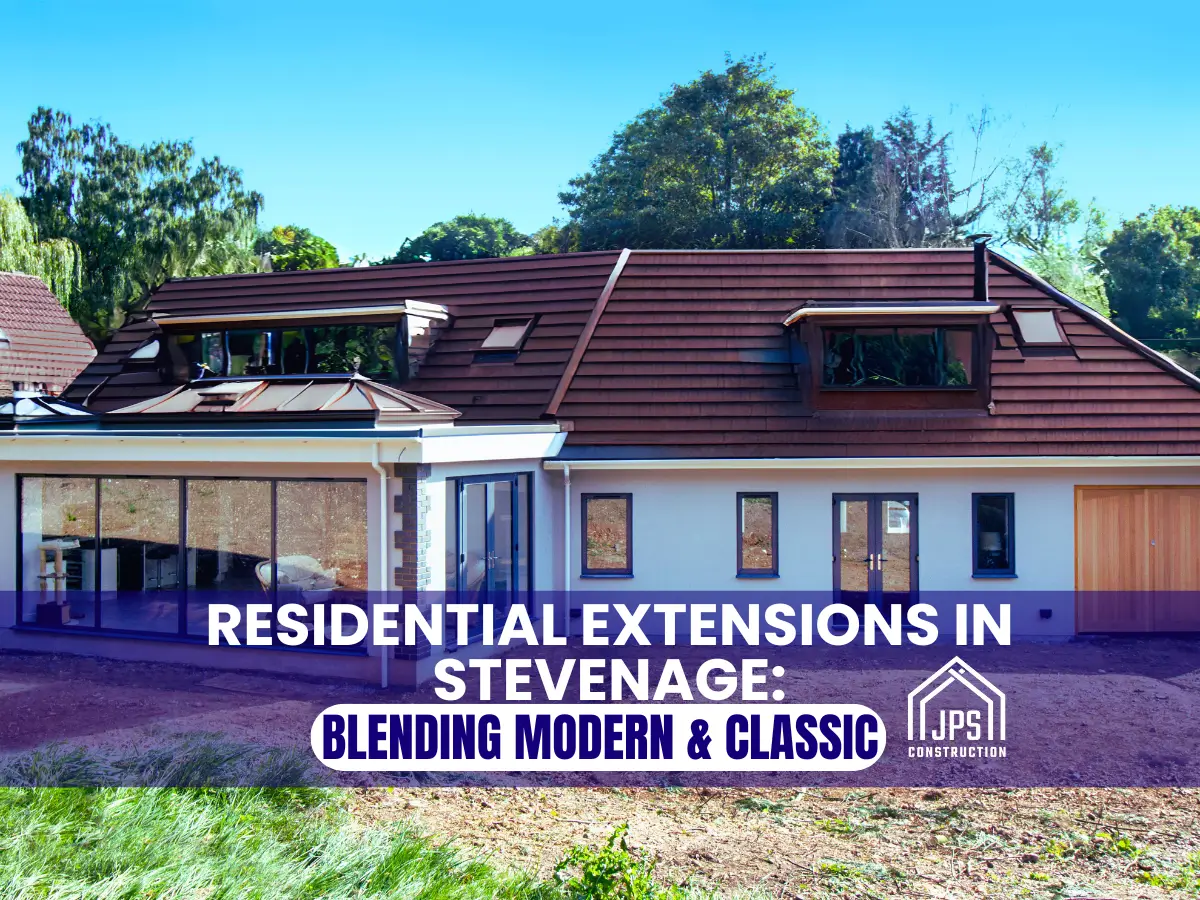
Shaped by both its rich history and ongoing growth, Stevenage is a town with a unique mix of post-war buildings and contemporary homes. That is why blending modern designs with traditional architecture is key when planning your residential extension in Stevenage. Ensuring harmony with the local surroundings is important in order to blend in perfectly.
We, at JPS Construction, understand how important it is to get the right balance between contemporary and traditional. We can help you design an extension that not only improves your home but also respects the town’s architectural vibe.
Today, we’ll take you through the key elements to consider when planning your residential extension in Stevenage.
Why Blending Matters in Stevenage’s Architecture
Stevenage has plenty to offer regarding interesting architecture; you’ll see a lovely range of 20th-century buildings with more modern designs. When designing your extension, you need to ensure that it retains the unique character of where you live.
Your new extension should seamlessly integrate with your existing property to preserve the character of your home and the neighbourhood. Whether your home is located in a quiet suburban neighbourhood or a more urban setting, your extension must complement the overall appearance of your property and fit in with the surrounding area.
1. Understanding the Local Architecture
Stevenage is a historically rich town with 20th-century architecture that complements more modern buildings. You should preserve the rich character of your surroundings while preparing for your extension.
Ensuring your new extension is properly integrated with the existing home means your property retains its character and contributes positively to the area. Whether your property is on a quiet suburban street or a busy city center, your extension should add aesthetic value to your property while complementing the surrounding area.
2. Match Materials and Colours
The materials used in your extension are hugely important to achieving a cohesive look with the current building. Many Stevenage homes include red or yellow brick with render detailing. When choosing the materials for your residential extension in Stevenage, consider using materials similar to your existing house to ensure your extension complements the existing home.
In terms of colour, ensure your extension’s palette corresponds with the original’s. Neutral hues are typically your best bet, complementing countless architectural styles. Of course, you can also add contrasting elements like black window frames or natural wood for that familiar touch of modernity while still keeping with the overall aesthetics.
3. Incorporate Traditional Features
Although uncommon in extensions, traditional architectural detailing can create an extension that seamlessly blends in with the local homes. Drawing on features such as sash windows, pitched roofs, or decorative stonework can make your extension feel as if it always belonged to the property.
A contemporary take with simple winks to the past can also shine. This approach allows you to create a modern addition without losing sight of the area’s traditions and feel. The trick is to walk the line between familiar and unfamiliar.
4. Focus on the Roof Design
One of the most prominent features of your extension is the roof design. In and around Stevenage, many roofs are made of pitch with traditional tiles or slates. If you’re working on an extension, you must ensure that the roof you add matches your original house’s shape, material, and colour. Choosing a complementary roof allows your extension to sit ‘closely’ to your original home, ensuring it appears as though the two are one.
If your home has a flat roof or other, more modern style, you can choose a contemporary roofing design that will integrate the extension’s look into the overall appearance of your home. Just be sure to use your color choice with the local aesthetic in mind to ensure your new roof complements your home and the surrounding properties.
5. Respect Local Planning Regulations
When considering extending your property in Stevenage, always refer to the local council for precise planning regulations. Any restrictions regarding Stevenage’s conservation areas and modern developments may be appropriate only. Such guidelines would help ensure extensions preserve the town’s character and architectural diversity.
Your property might, for example, be located in a conservation area. In that case, they might require you to comply with stricter requirements around materials, design, and the extension’s overall impact on the streetscape. An architect who knows them is worth their weight in gold for ensuring your extension meets these requirements.
6. Choose the Right Window and Door Styles
The windows and doors define the character of the building. If you want to install window and door fashions, utilise windows and doors that complement the theme for your residential expansion in Stevenage. Modern homes benefit from sliding or bi-fold doors, while casement windows and wooden front doors can improve traditional houses.
Note the proportion and placement of windows, as these can make or break the appearance of your extension. Keep all the window sizes and placements in line with the rhythm of the house you already have so you maintain a cohesive design.
7. Utilising and Sculpting the Outdoor Space
Planting or landscaping can help a residential extension in Stevenage feel like a natural part of your home. It is a must to have an outdoor space properly planned around your extension, may it be sprawling garden space or a limited courtyard. If you have a more traditional house, you may want to add timeless elements, such as hedges, stone walkways, and old-fashioned garden furniture. Contemporary outdoor furniture and clean-lined landscaping can complement modern homes.
You can blend the extension with your existing landscape by adding elements like garden walls, raised flower beds, or outdoor lighting to create a smooth, natural transition between the two places.
8. Maximise Natural Light
Use natural light to your advantage when planning your residential extension and design a bright and inviting home. Oversized windows, skylights, or even glass doors can fill the interior with bright light, giving the new area an open, airy feeling.
Orient the extension to maximize light capture based on the orientation of your home, and consider how window position interacts with what views you might have of your garden or courtyard. Using reflective surfaces or light finishes on the interior will help it feel even brighter and airy, ensuring a smooth transition from your home to home extension.
9. Consult with Experts
Speak with experts who know the ins and outs of residential extensions in Stevenage for quick advice that leads to a seamless project. Having architects, builders, and planners who know local building styles, planning regulations, and design guidelines will be critical to your extension’s success.
An architect will use their expertise to help you design an extension harmoniously with your home’s architecture. They’ll also ensure your plans come to fruition. So, working with local professionals would allow you to navigate any planning restrictions and make sure your extension meets every regulation.
FAQs
How do I ensure my residential extension blends well with Stevenage’s architecture?
In Stevenage, it is crucial to consistently blend your new extension with the previously designed architecture in the surrounding area; the key consideration is a balance between modernity and tradition.
Pay attention to the overall appearance of your area, and try to have a design that is considerate of the history and development of the town.
Can I add a contemporary extension to a traditional home?
Yes, a modern extension can complement a traditional home by incorporating subtle nods to the past, like heritage materials or shapes. This creates a stylish, functional space that enhances your home, but still nods to tradition of the neighbourhood. To familiarise yourself better, learn the 3 Benefits of Modern Home Extensions in Stevenage for Homeowners.
Do I need planning permission for my residential extension in Stevenage?
Most residential extensions in Stevenage require planning permission, though permitted development rights may cover some smaller ones. The Stevenage Borough Council’s Pre-Application Advice offers detailed information on planning permissions and guidelines for property extensions in Stevenage, helping you ensure your design respects local architectural standards.
How can I make sure my extension adds value to my home?
To add value to your home, design your extension to complement your property and neighbourhood. Use quality materials, create functional spaces, and ensure they meet local regulations to enhance value and usability.
Can JPS Construction help with the design and build of my residential extension?
Yes! At JPS Construction, we help homeowners in Stevenage create extensions that blend with their properties and the local area. Our team will guide you through every step, ensuring your extension enhances your home while respecting the town’s style.
Start Your Residential Extension Journey in Stevenage Today!
A new residential extension in Stevenage with the surrounding architectural style With an understanding of local architectural trends, the use of popular materials, and the inclusion of traditional features, an extension can successfully enhance your home and add value to your property.
Always seek advice from architects, surveyors, and builders to ensure your extension is designed and built to the highest standards and respects Stevenage’s unique architectural character.
For more advice on planning your residential extension in Stevenage or discussing your project with one of our experts, contact us today. You can reach us at Call Us: 01438 900303 or email us at info@jpsconstruction.co.uk. Let’s bring your vision to life!